

Why Some Productivity Problems Never Show Up in Reports
How businesses lose money through pressure, mistakes, and wasted management time.

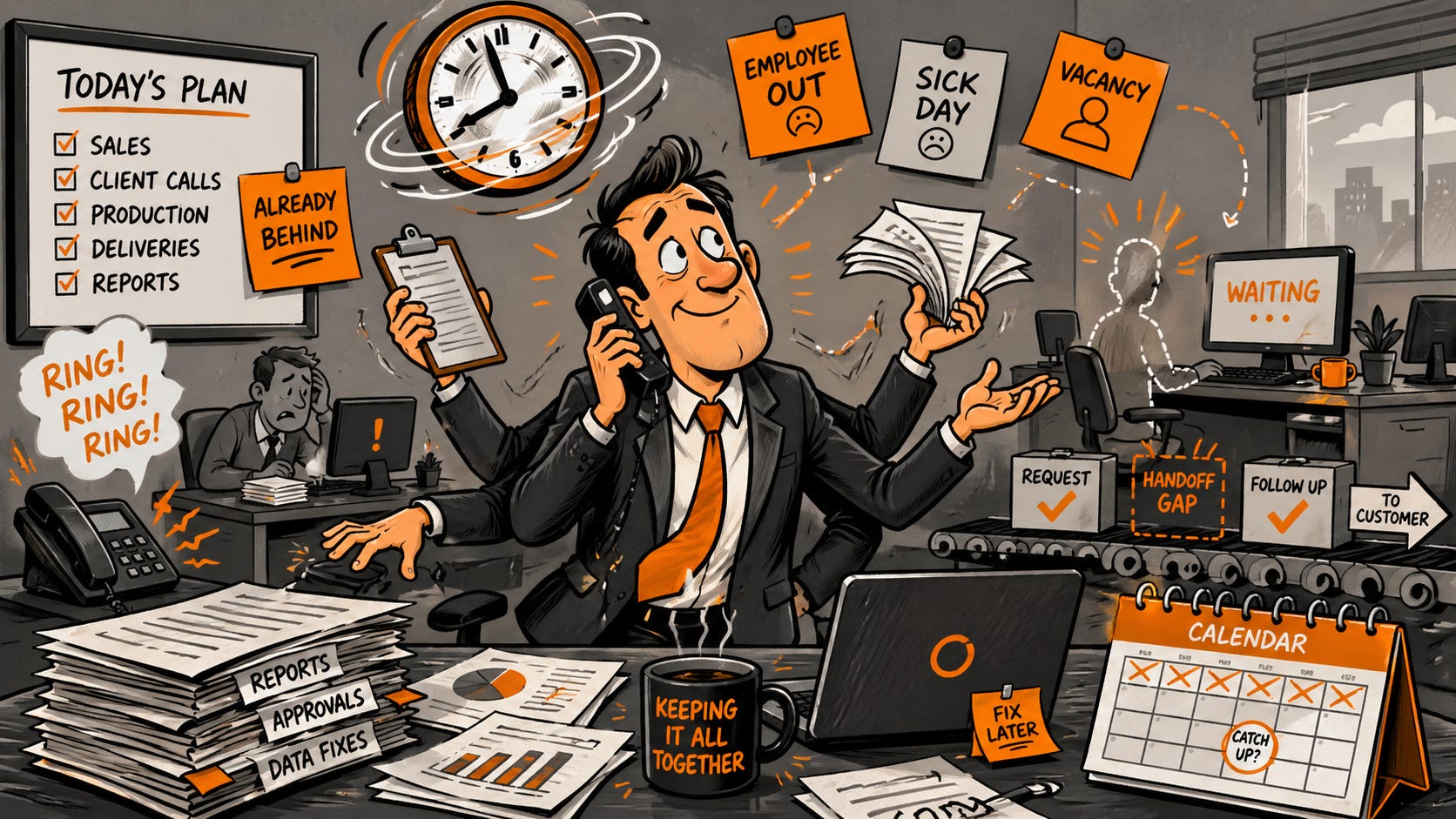
At first glance, absenteeism looks like a people issue.
Someone misses a shift. A supervisor adjusts the schedule. Another employee covers the gap. The work still gets done, just with a little more pressure on everyone else.
That is why the real cost often gets missed.
In the 1930s, Metropolitan Life Insurance Company noticed a recurring pattern among its secretaries and typists. Absences were showing up often enough to affect the ordinary rhythm of the office. The company studied the pattern and found that many of those missed days were tied to women’s health issues, including menstrual pain.
Its response reflected the time. Metropolitan Life promoted a health campaign that included women doctors teaching exercises, stretches, and breathing techniques intended to reduce symptoms and lower recurring absences.
Parts of that story now read as dated because they are.
The operating lesson still holds.
Metropolitan Life was not only looking at attendance. It was looking at the connection between employee health and the company’s ability to get work done.
The work depended on people being well enough to do it
Office work in the early twentieth century required consistency.
Letters had to be typed. Forms had to be processed. Records had to be updated. Calls had to be handled by people sitting at desks at specific times.
When one person was out, the work did not disappear. It shifted to someone else, moved more slowly, or waited until the next day.
That same pattern still shows up inside established businesses.
One missed shift can create overtime. One unavailable dispatcher can slow routing. One warehouse lead out for two days can leave newer employees guessing. One office manager dealing with a recurring health issue can turn a normal week into a set of small interruptions.
Hi there… I’m David Baer. I work with 7- and 8-figure businesses to streamline marketing, sales, and operations so revenue stops slipping through the cracks.
If you’re ready to create systems that drive real growth and reduce unnecessary expenses, grab 15 minutes on my calendar here to explore if I can help you.
The absence may sit in an employee’s HR file, but the cost shows up in the company’s operations. It appears in coverage gaps, slower handoffs, missed details, manager workarounds, and employees carrying work that was never supposed to be theirs.
Most businesses can absorb a few of these moments. That is part of running a company.
The problem begins when the moments repeat.
Health issues become operating issues before they become benefits issues
Most owners first deal with employee health through the benefits renewal.
The new rates arrive. The broker explains the options. The company decides how much of the increase to absorb and how much to pass along to employees.
That conversation matters, but it usually comes after the business has already paid in other ways.
Employees delay care because appointments are expensive, inconvenient, or hard to schedule. A manageable condition becomes three missed days. Stress lowers someone’s output before anyone calls it a health problem. Chronic pain turns into small mistakes, slower work, or a resignation that seems sudden only because nobody saw the buildup.
A business can have good people, clear processes, and steady demand while still losing capacity every week because employees cannot get basic care when they need it.
The owner may see the symptoms as separate problems.
Attendance is a supervisor problem. Productivity is a department problem. Turnover is a hiring problem. Healthcare is a benefits problem.
In practice, those problems often touch the same underlying issue: people are trying to work through conditions that could have been addressed earlier.
The cost hides because managers make the day work
Good managers are very good at hiding operational drag.
They move people around. They cover the gap. They call someone in. They delay the less urgent work. They take the extra load themselves because the customer still needs to be served and payroll still goes out on Friday.
The company survives the day, so the cost looks small.
Over time, that logic gets expensive.
Supervisors spend more time rearranging work. Experienced employees get pulled away from higher-value tasks. Customers wait longer. Quality slips in small ways. The strongest people carry more than they should until they become harder to keep.
This is where employee health becomes part of operational reliability.
Not because owners need to get involved in anyone’s private medical situation. They do not.
But access to care affects whether people can show up consistently, handle their work, and stay with the company long enough for their experience to matter.
And that makes it a business issue.
The benefits cost is only one part of the picture
Traditional healthcare benefits have become one of those expenses owners are trained to accept with a certain amount of resignation.
Rates go up. Options get narrowed. The plan changes. Everyone tries to make the best decision available inside a system that rarely feels designed for the employer or the employee.
It’s easy to see that as a cost-control problem.
There is another way to look at it.
If poor health access is already creating absence, slower work, overtime, turnover, and manager strain, then improving access is not simply a nicer benefit. It may reduce drag already sitting inside the business.
That is why I pay attention to programs that connect healthcare access with financial relief for the employer.
One example is the EHP Preventive Care Program I’ve shared here before
The program is designed to give employees access to everyday care at no cost to them, including primary care, urgent care, mental health support, wellness coaching, chronic disease management, and covered prescriptions. It is also designed to work alongside a company’s existing health plan, rather than replacing it or reducing employee take-home pay.
For employers, the financial side is the part worth reviewing. EHP’s materials describe a structure that can help companies reduce payroll tax liability through FICA savings while adding meaningful care access for employees. In some states, there may also be workers’ compensation savings. The result is a potential improvement in cash flow while giving employees a better path to routine and preventive care.
That combination matters. Because it gives the employee more access before small health issues become larger ones. It also gives the employer a way to offset some of the cost pressure that usually surrounds benefits.
And it does this without forcing the company to rebuild its existing benefits structure.
The question is where the drag already exists
Metropolitan Life’s absenteeism study is useful because the company looked beneath a routine workplace issue.
People were missing work. The simple explanation was attendance. The better question was what kept causing the absences.
That is still the useful place to start.
Look at the roles where one absence creates five interruptions. Look at the departments where coverage is always tight. Look at the employees who are dependable, but seem to be working through something that keeps getting worse. Look at how often managers quietly rearrange the day because someone could not get ahead of a health issue sooner.
Yes, some of this is ordinary life. But some of it is also operating slowdown.
The difference matters because operating drag has a cost. It affects labor planning, customer service, retention, margin, and the amount of pressure carried by the people who keep the business moving.
Most companies notice employee health costs when premiums rise.
They usually feel the impact much earlier than that.
The question worth asking is simple: Where is poor health access already costing the business before it ever appears in the benefits renewal?

If this helped you, consider sharing The Systems Brief with another business owner who is ready to build a business that runs on systems, not hope.
When you’re ready, here are some of the ways I can help you:
→ Expense Reduction Consulting
Need help creating or improving your revenue systems?
Hey David — love the art on this one. I do this, and I'd love to see more lighthearted play about AI in business to blow off some steam.
The manager masking concept is the one that hit hardest. Skilled managers absorbing disruptions until it just looks like "operations are fine" while long-term capacity quietly erodes underneath. That's invisible damage and it never shows up in a quarterly review because the person holding everything together is too good at their job to let it surface.
I work with small businesses building AI agents and the version of this I see constantly is the owner being the manager who masks everything. They're covering gaps, rescheduling, handling the thing the absent person was supposed to handle — and they call it "just how it is." It's not. It's a system running on one person's capacity to absorb chaos, and that's a system waiting to break.
The Met Life example from the 1930s is a great anchor too — they didn't solve an attendance problem, they solved a health problem that was wearing attendance as a costume. Root cause thinking is still rare and it shouldn't be. Smart piece.