

Why People Don’t Change Even When They Agree With You
For businesses seeing slow movement in sales or adoption despite strong offers

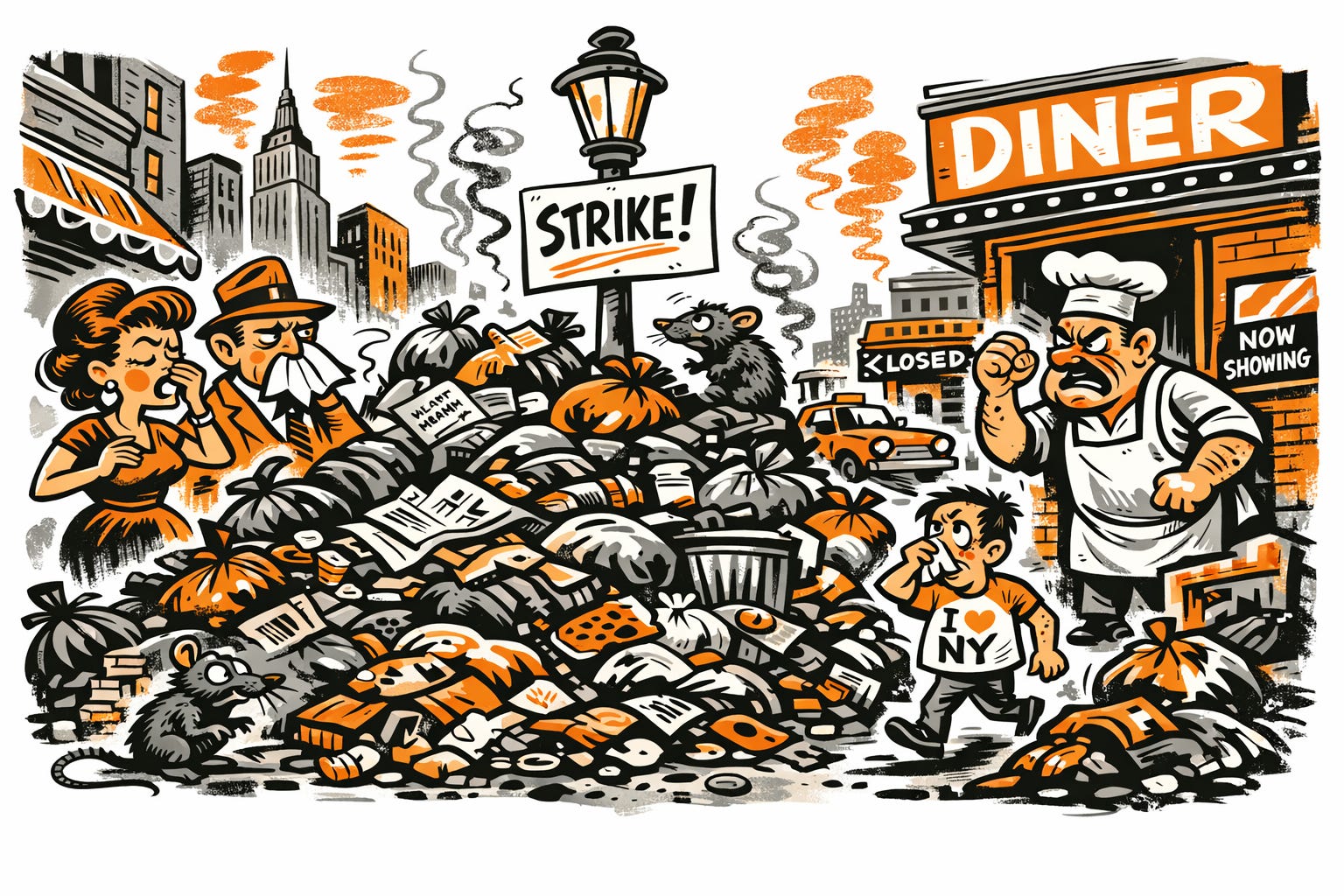
In the late 1960s, sanitation workers in New York City went on strike.
Garbage collection stopped.
At first, the disruption looked temporary. Missed pickups. Overflowing bins. The kind of issue people expect to resolve within a few days.
It didn’t.
Trash accumulated on sidewalks, then spread into the streets. Entire blocks filled with stacked bags. Businesses had trouble operating. People changed their routines just to move through the city.
The instructions for handling waste hadn’t changed.
What changed was behavior.
What the system relied on
City officials responded the way most systems do.
They issued guidance. Asked residents to reduce waste. Suggested temporary adjustments.
Compliance remained inconsistent.
From the outside, this looked like a communication problem. People were not following directions.
But most residents were dealing with very specific conditions on their own block. The guidance they received was general. Their situation was not.
Early on, the inconvenience stayed manageable. People expected normal operations to return.
The alternatives being suggested required effort and coordination. They were unfamiliar. They did not feel necessary yet.
So behavior stayed the same.
I work with 7- and 8-figure businesses to streamline marketing, sales, and operations so revenue stops slipping through the cracks.

If you’re ready to create systems that drive real growth and reduce unnecessary expenses, grab 15 minutes on my calendar here to explore if I can help you.
When the cost became unavoidable
Over time, the situation changed.
Not because of a new policy.
Because the cost of doing nothing became visible in a direct way.
Trash was no longer contained. It affected movement, business activity, and basic day-to-day routines. The downside of inaction was no longer something people had to imagine.
At that point, behavior began to shift.
Residents coordinated with neighbors. Businesses adjusted how and when they disposed of waste. Informal systems formed at the block level.
Those changes did not come from better instructions.
They came from pressure that was clear and immediate.
As those adjustments started to work, they became easier to continue.
Where this shows up in business
Most business owners recognize a version of this pattern.
A change gets introduced. A new process. A pricing adjustment. A different way of working with customers.
The logic behind the change is sound.
Adoption remains slow.
This is usually treated as a messaging problem or a training problem.
In many cases, neither is the main issue.
People continue with their current approach because it still makes sense to them. It may not be optimal, but it works well enough within their current conditions.
If that position is not acknowledged, they hold onto it.
The cost that builds slowly
In established businesses, the cost of staying the same rarely shows up all at once.
It appears in smaller ways.
Sales take longer to close. Some opportunities do not convert. Existing customers leave more often than expected. Margins tighten gradually.
Each of these can be explained in isolation.
Together, they point to something else.
A pattern that is no longer working as well as it used to.
Because the cost is spread out, it is easy to delay a response.
Why the alternative feels difficult
Even when people see the issue, they still hesitate.
Changing direction introduces uncertainty.
A customer evaluating a new vendor has to consider what might go wrong during the transition. A long-term client may prefer an imperfect arrangement over an unfamiliar one.
Familiar systems carry less perceived risk, even when they create friction.
That keeps behavior in place longer than expected.
The pattern behind behavior change
Across these situations, three conditions tend to be present before behavior shifts.
First, people feel that their current position is understood.
Second, the cost of continuing as-is becomes clear in practical terms.
Third, the alternative feels manageable.
When these conditions are not in place, even strong arguments do not lead to action.
The operational version of this problem
In marketing, this shows up when prospects agree with the message but do not move forward.
In sales, it appears as deals that stall after initial interest.
In client relationships, it shows up as resistance to changes that would improve results.
The issue is often not the offer itself.
It is the environment around the decision.
If the current situation has not been fully surfaced, the urgency is low.
If the downside is not concrete, it is easy to wait.
If the next step feels uncertain, people stay where they are.
What to look for inside your business
Most businesses already have places where this is happening.
A process that still works but takes longer than it should.
A service structure that made sense at a smaller scale.
A group of customers who have not adopted a change that would benefit them.
These situations tend to persist because they do not break all at once.
They continue operating, with increasing friction.
The question worth asking
Which decisions in your business are you expecting people to make before they can clearly see the cost of staying where they are?

If this helped you, consider sharing The Systems Brief with another business owner who is ready to build a business that runs on systems, not hope.
When you’re ready, here are some of the ways I can help you:
→ Expense Reduction Consulting
Need help creating or improving your revenue systems?