

The Expensive Gap Between a Decision and a Policy
For companies that prioritize speed over structure in sensitive decisions.

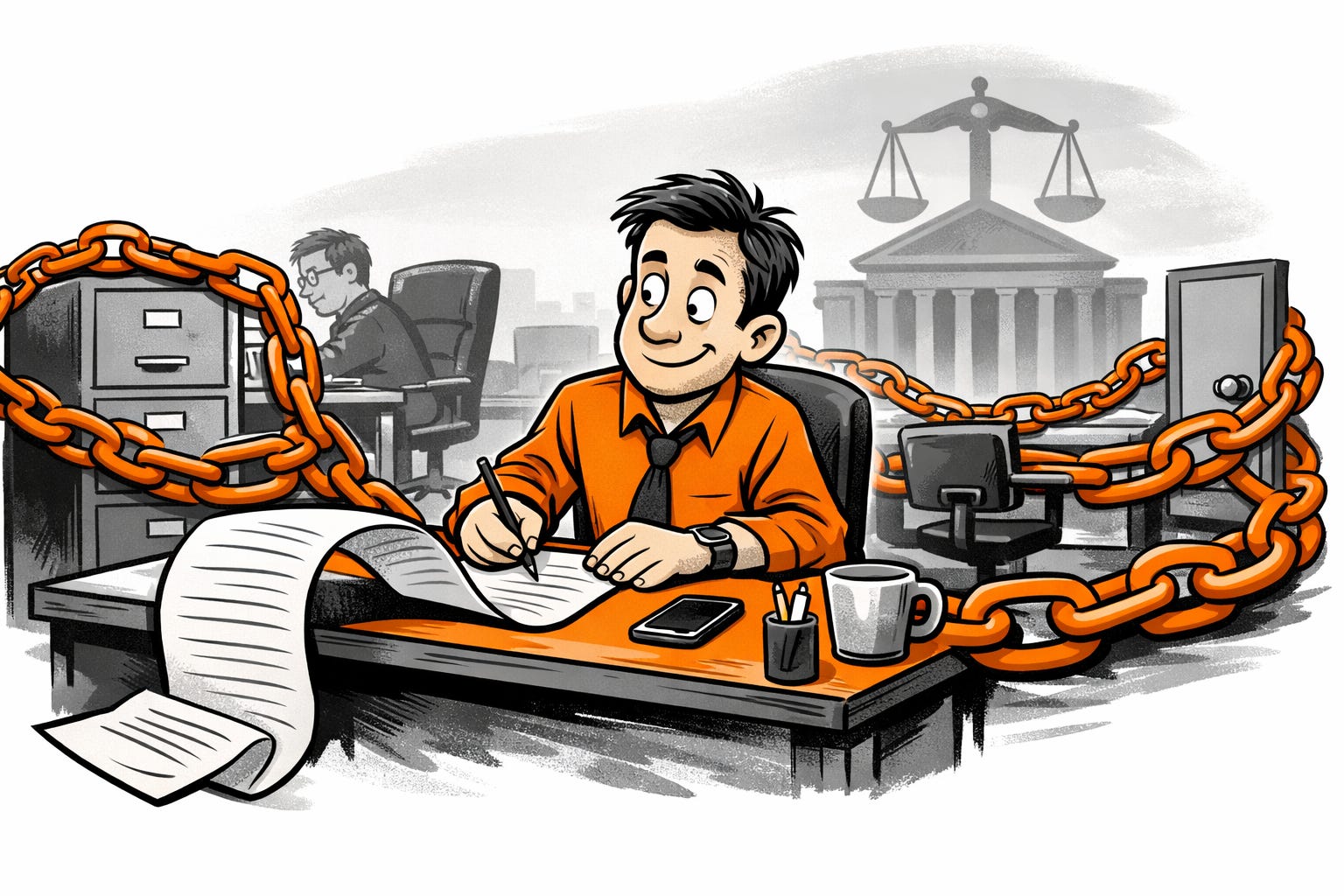
In the early 2000s, a store-level decision inside AutoZone turned into a legal process that ran for years.
An employee asked for a workplace accommodation tied to a medical condition. The request itself wasn’t unusual. It didn’t come in as urgent. It didn’t look like something that needed to move beyond the store.
So it didn’t.
A manager handled it the same way most situations like this get handled—locally, quickly, based on what seemed reasonable at the time. The decision was to deny the request and reassign the employee in a way that increased her commute.
That’s where it started.
The employee filed a complaint, and the issue moved outside the business.
It eventually became a federal case brought by the Equal Employment Opportunity Commission under the Americans with Disabilities Act. A jury awarded over $185,000 in damages, and the case continued through appeals well after that.
The original decision didn’t look like a legal event.
But it became one.
The system that made the decision possible
Most businesses don’t have a formal process for decisions like this at the moment they happen.
They have something faster.
A manager makes a call. An owner looks at it and decides whether it feels right. If there’s any uncertainty, someone might search for a quick answer and move on.
That becomes the system.
Hi there… I’m David Baer. I work with 7- and 8-figure businesses to streamline marketing, sales, and operations so revenue stops slipping through the cracks.
If you’re ready to create systems that drive real growth and reduce unnecessary expenses, grab 15 minutes on my calendar here to explore if I can help you.
Policies exist, but they don’t always cover situations like this in detail. Documentation depends on who is involved. Legal input usually shows up only when something clearly crosses a line.
Everything else runs on experience.
At an earlier stage of the business, that works well. There are fewer variables, fewer edge cases, and fewer situations that carry long-term consequences. Most decisions stay contained.
As the business grows, the decisions stay the same.
The exposure doesn’t.
When the cost shows up
The cost doesn’t appear at the moment the decision is made.
It shows up later, once the situation moves into a process the business doesn’t control.
In this case, the business wasn’t just dealing with a single outcome. There were legal fees that extended over multiple years, internal time pulled into depositions and documentation, and management attention that shifted away from running the business and into responding to it.
None of that was visible at the start.
It came from how the situation was handled before it became formal.
There wasn’t a defined process for handling the request. Documentation wasn’t consistent. No one looked at the decision through a legal lens while it was being made. By the time that perspective showed up, the position had already been set.
At that point, the role of legal is different.
It’s not shaping the decision.
It’s dealing with what’s already in motion.
Why this pattern occurs in mature companies
The AutoZone case isn’t unusual.
Most established businesses run into versions of this pattern because of how decisions actually happen day to day.
Situations come up that don’t clearly belong to one category. Someone needs to be let go. A contractor relationship starts to shift. An employee raises something that sits in a gray area. None of these look like legal issues when they first appear.
They look like decisions.
And they get handled the same way most decisions get handled—based on what has worked before, what feels reasonable, and what keeps things moving.
That approach is efficient.
It also leaves certain types of decisions exposed.
The quiet form of legal debt
Over time, this creates something most businesses don’t track.
Because there’s not typically a clear, single risk. Instead multiple risks buildup overtime - and it’s hard to see how they all tie together.
Contracts get reused without being reviewed. HR situations get handled without consistent records. Terminations follow different paths depending on who is involved. Disputes get resolved in the moment without a consistent structure behind them.
Each one works on its own, with no immediate disruption. And no clear signal that anything is wrong.
But each decision leaves behind something incomplete.
A clause that doesn’t fully cover the situation. A conversation that isn’t documented. A boundary that isn’t clearly defined for the next time it happens.
Individually, these don’t carry much weight. But together, they change how exposed the business is.
The part most owners don’t see
By the time a situation reaches a lawyer, most of the important pieces are already fixed.
What happened is already established. What was documented is all that exists. The options available are narrower than they would have been earlier.
At that stage, the focus shifts.
It’s no longer about making the best decision.
It’s about managing the outcome of the one that was already made.
That shift is where the cost tends to concentrate.
What changes when legal is part of the system
There’s a different way these situations play out.
Not by slowing decisions down, but by changing when a different perspective is involved.
Before a contract is signed. Before a termination is carried out. Before a situation escalates into something formal. Before a policy gets tested under pressure.
The decisions themselves don’t become more complicated.
But they become more consistent.
They get documented the same way each time. They follow a structure that holds up if the situation moves beyond the business. They’re made with a clearer view of what could happen next.
That doesn’t eliminate risk.
It changes how early it’s addressed.
The question worth asking
If you look across your business today… At how decisions actually get made, not how they’re supposed to be made… Where are you making calls that could become something larger once they leave your control?

If this helped you, consider sharing The Systems Brief with another business owner who is ready to build a business that runs on systems, not hope.
When you’re ready, here are some of the ways I can help you:
→ Expense Reduction Consulting
Need help creating or improving your revenue systems?