

How To Sell Using Simplicity
Why Customers Choose What’s Clear, Not What’s Clever


You’ve likely seen it before. Maybe even experienced it in your own business…
You spend months building something new. You know it’s better than what’s out there. But when you launch, customers don’t get it. They hesitate. They ask questions. Some walk away. It’s frustrating.
This happens to big companies and small ones. It’s not because the idea is bad.
It’s because it’s not clear.
People don’t want to work hard to understand something new. If it feels confusing, they move on.
If you want people to try something new, you have to make it simple. Not just simple to use, but simple to understand. If you can do that, you remove the biggest barrier to adoption.
I work with 7- and 8-figure businesses to streamline marketing, sales, and operations so revenue stops slipping through the cracks.

If you’re ready to create systems that drive real growth and reduce unnecessary expenses, grab 15 minutes on my calendar here to explore if I can help you.
Why Simplicity Wins
People are busy. They don’t have time to figure out complicated products. If your message is clear, people listen. If your product is easy, people use it.
Think about when Dropbox launched back in 2008.
Their homepage had a short video. It showed a person dragging files into a folder. That was it. No technical explanation. No long lists of features. It was just a simple story: “Put your files here. Access them anywhere.” That certainly helped Dropbox’s speedy growth. They made something new feel easy.
Apple does this too.
When they launched AirPods, they didn’t talk about Bluetooth protocols or battery life. They said, “Open the case near your iPhone.” That’s all. Anyone could do it. And that simplicity made them easy to buy.
Five Ways to Make Innovation Simple
1. Start with the Customer’s Questions
When you launch something new, your customers are bound to have questions. What is it? How does it help me? Is it hard to use? Will it work with what I have?
Don’t wait for them to ask. Answer these questions right away. Use plain language. Avoid jargon.
Example:
Nest Thermostat was one of the first smart thermostats. People worried it would be hard to install. Nest’s website showed a short video: “Most people install Nest in 30 minutes or less.” They showed someone doing it. That answered the big question: “Can I do this myself?”
Tip:
Write down the top five questions your customers might have. Answer them on your website, in your emails, and in your sales calls.
2. Use Short Sentences and Clear Words
Long sentences make things harder to understand. Break them up. Use words your customers use. (You might have noticed, that’s exactly what I’m doing here.)
Example:
Airbnb didn’t say, “We are a peer-to-peer lodging marketplace.” They said, “Book unique homes and experience a city like a local.” Simple. Clear.
Tip:
Read your product description out loud. If you stumble, it’s too complicated. Rewrite it until it sounds like something you’d say to a friend.
3. Show, Don’t Just Tell
People remember what they see. Use pictures, videos, or demos. Make it visual.
Example:
Uber’s first website had a map. It showed cars moving around the city. You could see how close a ride was. No need to explain how it worked. You could see it.
Tip:
If you can show your product or service in action, do it. Even a simple GIF or a few photos can help.
4. Focus on the Main Benefit
Don’t list every feature. Pick the one thing that matters most. Lead with that.
Example:
When Amazon launched one-click ordering, they didn’t talk about their database or security. They said, “Buy with one click.” That’s what people wanted—less hassle.
Tip:
Ask yourself: If my customer remembers only one thing, what should it be? Put that at the top.
5. Make It Easy to Start
The first step should be obvious and simple. Don’t ask for too much up front.
Example:
Spotify lets you listen for free. You don’t have to pay or enter a credit card to try it. That’s why so many people gave it a shot.
Tip:
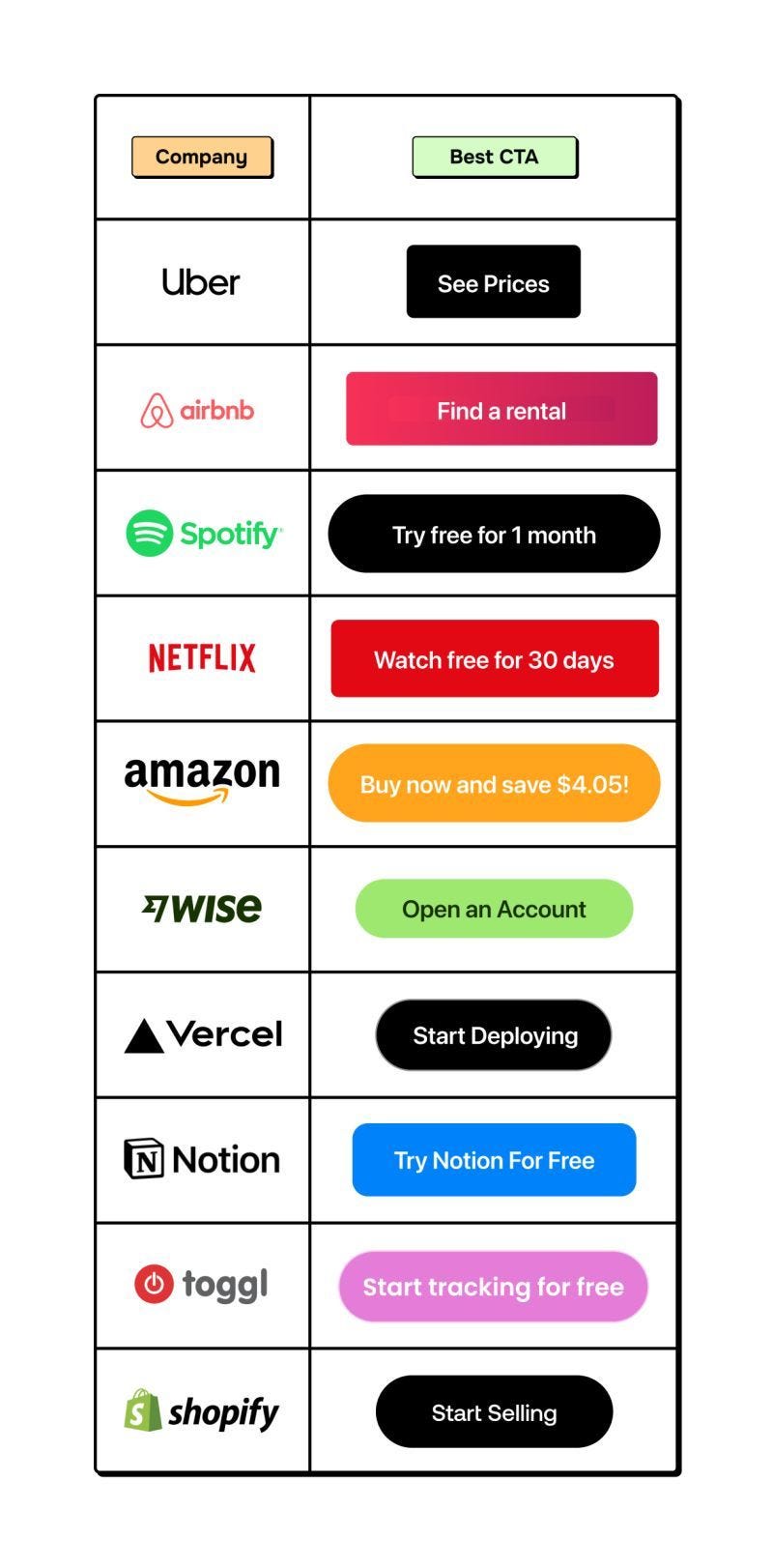
Use simple and clear calls-to-action on your website and in your emails. Here’s a visual I recently saw on LinkedIn of how to do this effectively:
Simplicity in Product Design
It’s not just about words. Your product itself should be simple. If it’s hard to use, people won’t stick with it.
Tesla made electric cars easy to drive. You get in, press a button, and go. No special training. No complicated dashboard.
Coca-Cola Freestyle machines let you pick a drink with a touchscreen. The choices are endless, but the process is simple: tap, pour, enjoy.
Uber made booking a ride as easy as tapping a button. No phone calls. No cash. Just tap and wait.
What Other Experts Say
Simplicity is a widely applicable concept that goes far beyond selling your product or service. Here are a few other areas of business where keeping things simple matters:
Design thinkers say you should watch real people use your product. If they get stuck, fix it.
Change management experts say people resist what they don’t understand. Make it clear, and they’ll try it.
Product managers at big tech firms test their products with new users. If someone can’t figure it out in a minute, they change the design.
Why Most Innovations Fail
Most new products don’t fail because they’re bad. They fail because they’re confusing. Research shows that people avoid things that seem hard to understand. If you make it simple, you give your idea a real chance.
How to Apply This in Your Business
Here’s a checklist you can use:
❑ Write down the main benefit of your product. Make it the first thing people see.
❑ List the top questions customers have. Answer them in your marketing.
❑ Use short sentences and clear words everywhere.
❑ Show your product in action with photos or video.
❑ Make the first step easy. Remove any extra steps.
❑ Watch a new customer use your product. If they get stuck, fix it.
Innovation is hard. But getting people to try something new doesn’t have to be. If you make your idea simple and clear, more people will give it a chance.
Don’t try to impress with big words or long lists of features. Focus on what matters. Make it easy to understand. Make it easy to start.
Here’s something you can try today:
Pick one product or service you offer. Rewrite your main message using only short sentences and simple words. Show it to someone outside your business. If they get it right away, you’re on the right track. If not, keep working. Simplicity takes effort, but it pays off.
If this helped you, consider sharing The Systems Brief with another business owner who is ready to build a business that runs on systems, not hope.
When you’re ready, here are some of the ways I can help you:
→ Expense Reduction Consulting
Need help creating or improving your revenue systems?