

10-Step Checklist For Predictable Revenue Growth

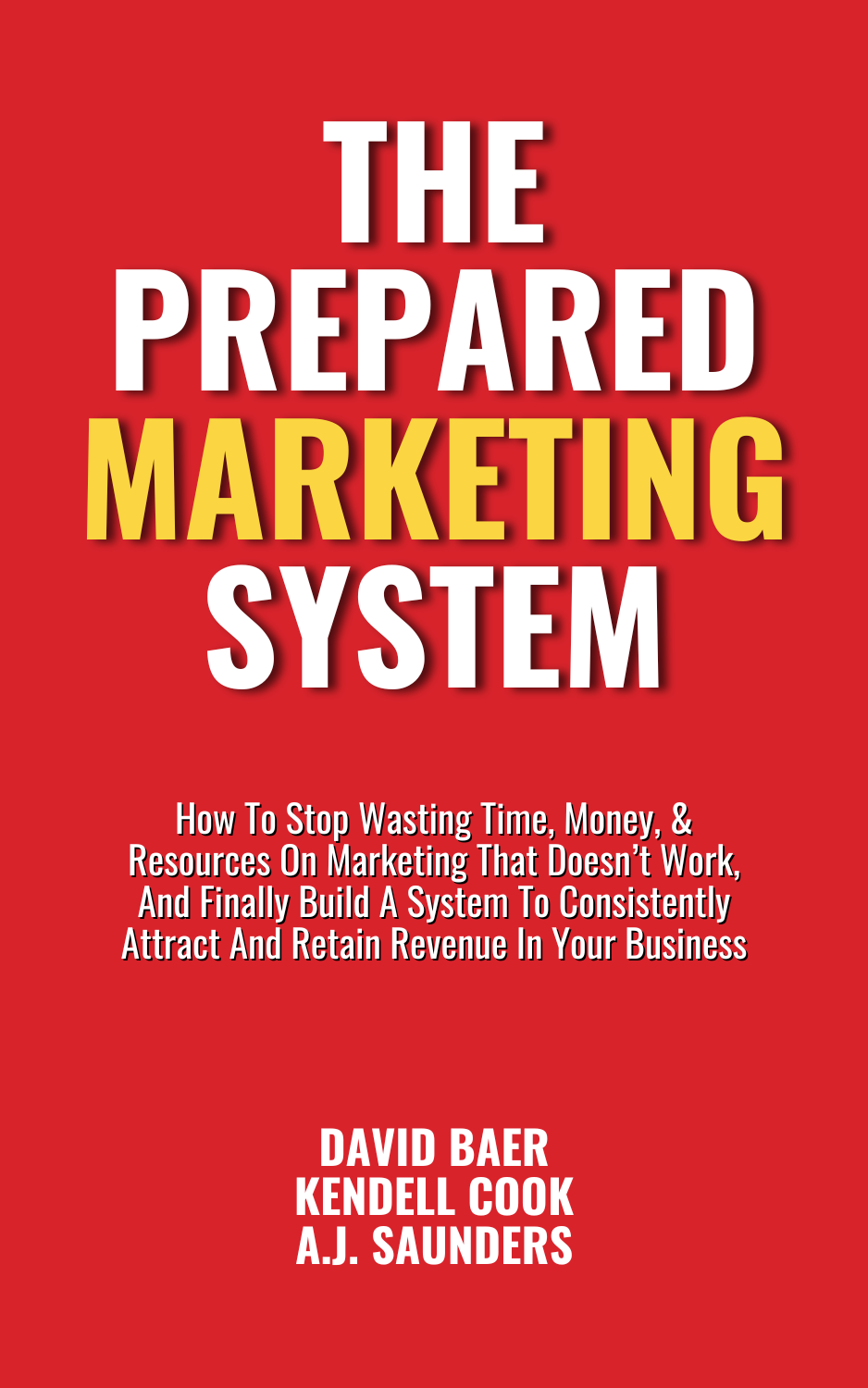
Grab your free copy of my book, The Prepared Marketing System, so you can access the tools and insights needed to build a business that’s resilient, efficient, and ready for the next stage of growth.

Most small businesses have developed a marketing approach that’s best defined as a series of disjointed tactics. Think of this checklist as an initial step to turning your marketing into a cohesive system that drives measurable growth.
This framework - inspired by the work we do with clients - connects every campaign to strategic business goals, ensuring every dollar spent on marketing delivers predictable and scalable results.
❑ Step 1: Define Strategic Business Objectives
Why it’s critical: Without clear objectives, marketing efforts risk being unfocused and inefficient.
Actionable Tasks:
Identify 3-5 key business priorities for the next 12 months (e.g., revenue growth, customer retention, market expansion).
Rank objectives by importance and urgency to focus your marketing strategy.
Break each objective into measurable sub-goals.
Example: If your goal is a 15% increase in client retention, a sub-goal could be implementing a loyalty program within 90 days.
Pro Tip: Use The Prepared Marketing System’s "Business Objectives Mapping Tool" to align marketing with overarching growth initiatives.
❑ Step 2: Map Your Customer Journey
Why it’s critical: A clear customer journey prevents drop-offs and aligns campaigns to guide prospects through every stage of engagement.
Actionable Tasks:
Plot each stage of the customer journey: Awareness, Consideration, Decision, Retention, Advocacy.
Identify the marketing channels most effective at each stage (e.g., blog posts for awareness, email nurturing for decision).
Highlight any gaps where your current efforts don’t address key stages.
Example: If you’re strong in Awareness but weak in Retention, prioritize email campaigns for existing clients.
Pro Tip: Use data from your CRM to pinpoint drop-off points and optimize underperforming stages.
❑ Step 3: Audit Existing Campaigns for Alignment
Why it’s critical: Existing campaigns may not be optimized to support your current business priorities.
Actionable Tasks:
List all active marketing campaigns and match them to your business objectives.
Example: Does your customer retention campaign effectively align with your goal of increasing repeat purchases by 20%?
Eliminate or pause campaigns that don’t directly support your top objectives.
Identify opportunities to consolidate overlapping campaigns for better efficiency.
Pro Tip: Leverage The Prepared Marketing System’s "Campaign Alignment Matrix" to evaluate campaign performance against goals.
❑ Step 4: Set and Track Relevant KPIs
Why it’s critical: KPIs (key performance indicators) create a clear benchmark for success, ensuring you stay on track.
Actionable Tasks:
Assign specific KPIs to each marketing objective.
Examples: Lead conversion rate, average client lifetime value, or cost per acquisition (CPA).
Define reporting intervals (weekly, monthly, quarterly) to monitor progress.
Use visual dashboards to simplify tracking and make data actionable for your team.
Pro Tip: Focus on leading indicators (e.g., email open rates) as well as lagging indicators (e.g., revenue growth) to identify trends early.
❑ Step 5: Prioritize High-Impact Channels
Why it’s critical: Spreading efforts across too many channels dilutes effectiveness.
Actionable Tasks:
Use historical data to identify the top-performing channels for each objective.
Example: Social ads may be strong for lead generation, while email excels for retention.
Invest additional resources into 1-2 high-performing channels while optimizing or sunsetting underperforming ones.
Test new channels only after optimizing your existing top performers.
Pro Tip: The Prepared Marketing System’s "Channel Optimization Guide" includes benchmarks for common industries.
❑ Step 6: Align Messaging with Strategic Goals
Why it’s critical: Misaligned messaging can confuse prospects and weaken trust.
Actionable Tasks:
Ensure your value propositions address customer pain points directly.
Example: Replace generic "Save time and money" with "Reduce onboarding time by 50% using our proven system."
Develop message variations tailored to each stage of the customer journey.
Example: Early-stage leads may need education, while later-stage leads need proof points and urgency.
Test messaging consistency across all channels to avoid mixed signals.
Pro Tip: Use A/B testing to refine message effectiveness across customer segments.
❑ Step 7: Implement Follow-Up Systems
Why it’s critical: Many potential clients require nurturing before converting.
Actionable Tasks:
Design follow-up workflows for prospects who don’t convert immediately.
Example: Create a 5-email series offering additional resources and social proof.
Segment your audience by behavior (e.g., clicked an ad but didn’t sign up) to deliver personalized follow-ups.
Establish triggers (e.g., cart abandonment) that activate automated follow-up sequences.
Pro Tip: Automate these systems using tools like ActiveCampaign or HubSpot for maximum efficiency.
❑ Step 8: Leverage Automation to Scale
Why it’s critical: Automation allows leaders to focus on strategy while campaigns run smoothly.
Actionable Tasks:
Automate lead scoring to prioritize your sales team’s outreach.
Build workflows for repetitive tasks like post-purchase thank-you emails or onboarding sequences.
Regularly audit automation sequences to ensure they remain relevant as goals evolve.
Pro Tip: Start with high-impact automations that save the most time, like lead qualification workflows.
❑ Step 9: Optimize and Iterate Monthly
Why it’s critical: Marketing alignment isn’t a one-time project—it’s an ongoing process.
Actionable Tasks:
Schedule monthly reviews of KPIs and campaign performance.
Adjust resources or tactics for underperforming areas.
Test small changes (e.g., new CTA phrasing) to continually improve ROI.
Pro Tip: Use The Prepared Marketing System’s "Monthly Optimization Checklist" to guide reviews systematically.
❑ Step 10: Communicate Insights to Your Team
Why it’s critical: Your team needs clarity on progress to stay aligned and motivated.
Actionable Tasks:
Share performance metrics in weekly or monthly team meetings.
Celebrate wins to reinforce successful strategies.
Example: “Our new follow-up workflow increased conversion rates by 15% in the last quarter!”
Encourage feedback to refine processes and uncover blind spots.
Pro Tip: Provide visual dashboards during presentations to make data more accessible.
Next Step
This checklist provides a high-level framework for aligning marketing with business objectives, but it’s just the beginning.
The Prepared Marketing System takes you deeper into actionable strategies, tools, and templates to build a marketing machine that drives predictable and scalable results.
By downloading The Prepared Marketing System, you’ll…
Gain a comprehensive roadmap for aligning every aspect of your business with growth goals.
Learn proven methods for optimizing customer retention and lifetime value.
Access advanced tools to streamline operations, empower your team, and free your focus for strategic leadership.
Download The Prepared Marketing System now and take the next step toward a smarter, more scalable approach to marketing and business growth - and make every marketing effort count.
If this helped you, consider sharing The Systems Brief with another business owner who’s ready to build a business that runs on systems, not hope.